
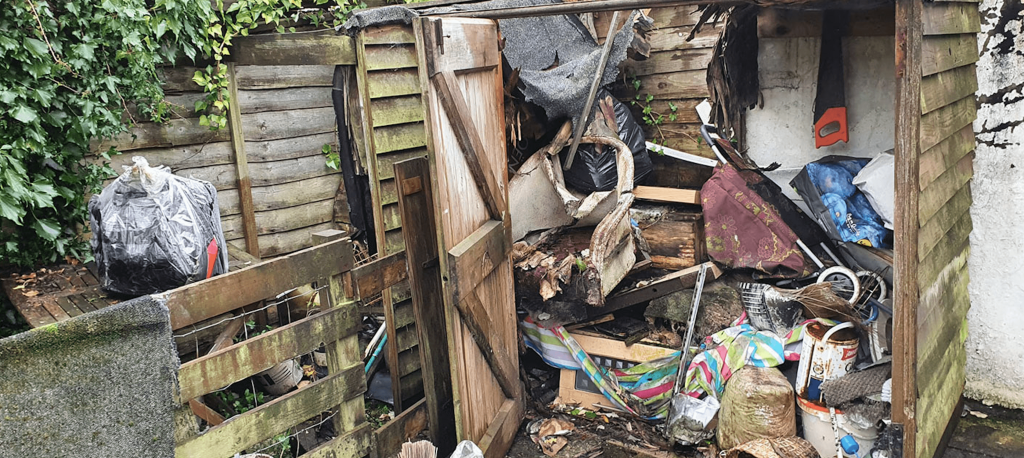
Walk into almost any garden in Britain, and there’s a good chance you’ll spot it—the humble shed. It’s a national icon, right up there with a cup of tea and moaning about the weather. Sheds are where we keep our tools, store old bikes, stash leftover paint tins, and shove in anything that doesn’t belong indoors. But what we rarely ask is this:
How much waste is hidden in garden sheds? And what’s the real cost of ignoring it?
This blog uncovers a quiet but very real problem—one we see daily in rubbish removal jobs all over London and beyond.
The Shed: A Space for Tools… or Trash?
Let’s be honest—no one ever builds a shed thinking it’ll become a dumping ground. It starts with the best intentions. A place to store your mower. A few DIY tools. Maybe some folding chairs. But slowly, bit by bit, the clutter creeps in.
That BBQ you haven’t used in five years?
The broken fan you swore you’d fix?
The ten half-empty tins of paint from the 2014 living room project?
Into the shed they go.
Over time, the shed stops being useful and becomes the “just stick it in there for now” zone.
How Common Is Shed Clutter in the UK?
Surprisingly common. According to a 2021 survey by Toolstation, 62% of UK homeowners admit to using their shed to store items they haven’t touched in over 12 months. That includes old furniture, boxes of forgotten possessions, outdated electronics, and more.
A similar poll by GoCompare found that:
- 1 in 4 sheds is so cluttered you can’t walk inside.
- 31% of people have no idea what’s at the back of their shed.
- 14% have found something dead in there (usually mice or rats).
That last one might sound like a joke, but we can confirm — it’s not.
Why It’s a Problem: Health, Safety, and Legal Risks
Most people don’t think of their garden shed as a health risk, but here’s the truth: what you don’t see can hurt you.
Here’s how:
1. Fire Hazards
Sheds often contain flammable materials—petrol, paint, varnish, white spirit, old aerosols, or even fireworks. Left in heat or in deteriorating containers, these can ignite easily. Fire brigades around the UK report hundreds of shed fires each year, many of which spread to nearby homes.
2. Vermin and Pests
Piles of cardboard, fabrics, or soft furnishings create perfect nesting spots for rodents. We’ve found entire rat colonies living undisturbed in old garden sofas or under toolboxes.
3. Injury Risk
When sheds are packed top to bottom with clutter, items fall. It’s not uncommon for a customer to call us in only after they’ve hurt themselves trying to move something.
4. Illegal Storage
Many people unknowingly store hazardous waste — like batteries, fluorescent tubes, solvents, pesticides — which cannot legally be disposed of in general waste or left indefinitely in storage.
The Psychology of “Out of Sight, Out of Mind”
So why do people let it build up?
Avoidance.
Most of us don’t like dealing with waste. It’s messy, it takes time, and it reminds us of tasks we didn’t finish. So we push the problem into a shed and shut the door.
It’s the same reason some people never open a certain drawer in their kitchen or leave unopened mail on a table for weeks.
But sheds are bigger. Which means the problem gets bigger, too.
Stories from the Job: What We’ve Found in Garden Sheds
At Shed Clearance, we’ve cleared thousands of sheds across London and the South East. And while every job is different, a few common themes always appear:
🧯 The DIY Graveyard
Old plasterboards, rusted tools, broken shelving units, unfinished flat-packs, and dozens of loose screws in a jar. The dreams of past DIY projects — abandoned and dusty.
🎄 The Seasonal Overflow
Christmas lights tangled with Halloween decorations, next to a broken artificial tree, with a mouldy paddling pool on top. All of it unusable, but still stored “just in case.”
💺 The Broken Furniture Pile
Deck chairs with missing screws, split garden benches, tables with no legs. They’ve been “on the to-do list” for years. No one ever fixes them.
📦 The Time Capsules
Boxes labelled “kid’s stuff” or “mum’s house” from moves that happened a decade ago. Contents: damp books, old toys, VHS tapes, outdated paperwork, faded photos — sometimes destroyed by mould or mice.
The Environmental Impact
It’s not just about clearing space. All this hidden waste adds up environmentally.
When garden sheds become mini landfills, they contribute to the UK’s broader waste and recycling crisis. The more junk we hoard and ignore, the more likely it ends up damaged, contaminated, and unrecyclable when it’s finally cleared.
According to WRAP UK, over 60% of household waste stored for “later use” ends up being disposed of improperly—meaning it’s either fly-tipped, burned, or mixed with general waste.
If even a small portion of the UK’s 15 million garden sheds are holding avoidable waste, that’s a serious volume of potential pollution.
Why Shed Clearance is Often a Turning Point
We’ve noticed a pattern: shed clearance often marks the start of bigger change.
- It helps homeowners reclaim their outdoor spaces.
- It motivates garden projects and home improvements.
- It even helps people process grief when sorting through a late relative’s things.
Sometimes people cry when we finish. Not because we’ve thrown anything valuable away—but because we’ve helped them let go.
That’s the emotional side of rubbish removal no one talks about.
Why People Delay—and Why You Shouldn’t
Common reasons people put off clearing their shed:
- “I’ll sort it myself one weekend.” (But never do.)
- “There might be something valuable in there.” (Usually not.)
- “I don’t want strangers seeing my stuff.” (We’re professionals. We’ve seen worse.)
- “It’s too expensive.” (Not when you weigh the cost of space, stress, and safety.)
But here’s the truth: a cluttered shed is a waste of a useful space. You paid for that square footage. You deserve to enjoy it.
How to Know It’s Time to Clear Your Shed
Here’s a simple checklist:
- You haven’t opened the shed in over 3 months.
- You can’t walk from one end to the other without moving something.
- You’ve bought a tool or item you already owned, but couldn’t find.
- You’ve seen signs of pests (droppings, chewed boxes, smells).
- You’re planning garden work but have nowhere to store tools.
- You’re afraid to open the door.
If one or more of these applies, it’s time.
What Shed Clearance Involves (When You Call a Pro)
At Snappy Rubbish Removals, a typical shed clearance includes:
- Removal of all junk, tools, furniture, boxes, paint, wood, and debris
- Sorting and separating items for recycling, reuse, or safe disposal
- Optional dismantling of the shed if it’s damaged or no longer needed
- Sweeping and basic clean-up of the space
We handle the heavy lifting, the waste licenses, the transportation — everything. All you do is point.
Final Thought: Reclaim the Space, Reclaim Control
Garden sheds are supposed to serve you — not stress you. If your shed has become a forgotten dumping ground, it’s not a failure. It’s just a space that needs help.
Clearing a shed doesn’t just give you back square metres — it gives you back peace of mind. Whether you want to turn it into a workshop, gym, potting shed, or just have room to breathe — we’re here to help.
Because when the clutter’s gone, you see possibilities again.
Sources & References:
- Toolstation 2021 Shed Usage Survey
https://www.toolstation.com/news/whats-in-your-shed/ - GoCompare Home Storage Habits Report
https://www.gocompare.com/home-insurance/waste-survey/ - WRAP UK – Household Waste Prevention Data
https://wrap.org.uk/resources/report/household-waste-prevention - London Fire Brigade – Fire Safety Statistics
https://www.london-fire.gov.uk/ - British Pest Control Association
https://bpca.org.uk/